
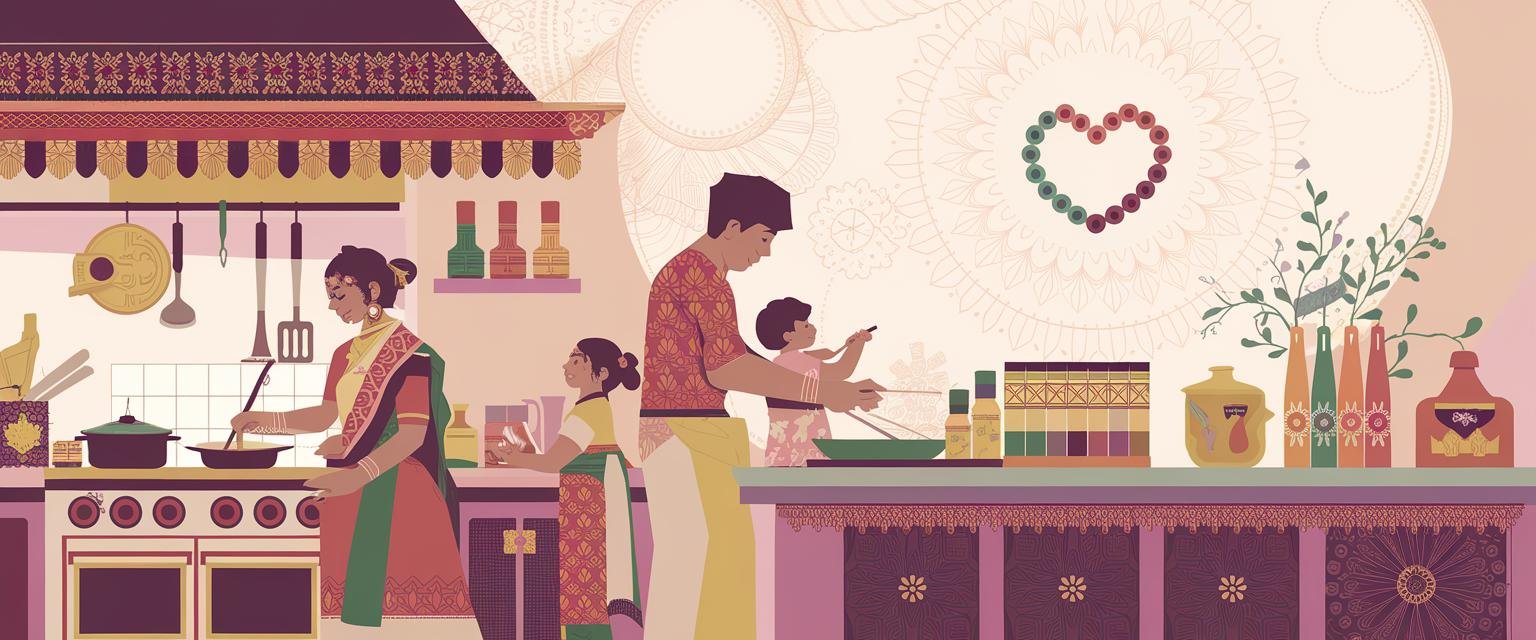
Non-Verbal Love: A Gentle Guide to Silent Affection
Introduction
Have you ever felt loved without hearing the words “I love you”? In many families, especially across South Asian households, love isn’t always verbalized—yet it flows through everyday actions, quiet gestures, and unspoken rituals. When words of affirmation are rare, we learn to read between the lines, finding warmth in the spaces where words don’t reach.
This guide explores the beautiful language of non-verbal love—those subtle expressions that, once recognized, reveal profound care that might have been present all along. For those who grew up in families where emotions weren’t openly discussed, understanding these quieter forms of affection can be healing, offering a new lens through which to view your childhood and family relationships.
Table of Contents
- Acts of Service: Love in Action
- The Silent Language of Physical Presence
- Reinterpreting Parental Love
- Cultural Contexts of Unspoken Love
- Quick Wellness Questions
- Finding Your Path Forward
Acts of Service: Love in Action
In homes where “I love you” rarely echoes through the hallways, love often takes the form of practical care. These acts of service—small and large—create a safety net of support that speaks volumes about a parent’s or family member’s devotion.
Food as a Love Language
Consider the mother who remembers your favorite dish and prepares it after a long day, or the father who cuts fruit for you without being asked. In many cultures, especially South Asian ones, food preparation is perhaps the most consistent expression of care. The parent who packs extra rotis in your lunchbox or ensures you never leave home hungry is saying “I love you” with every bite.
Practical Support and Sacrifices
Think of the parent who worked extra hours to fund your education, or the one who gave up personal comforts to provide opportunities for you. These quiet sacrifices—taking the last roti, wearing old clothes so you could have new ones, or prioritizing your needs—are profound expressions of love that often go unacknowledged until adulthood.
Even seemingly ordinary actions carry weight: the relative who fixes things around your home, the sibling who helps with your homework, or the parent who waits up until you’re safely home. These acts create a foundation of reliability and care that words alone cannot build.
The Silent Language of Physical Presence
In many families, particularly those with cultural roots where physical affection isn’t openly displayed, love manifests in quieter forms of presence and subtle body language. These may be easy to overlook but carry significant emotional meaning.
Proximity as Affection
Sometimes love is communicated simply through being near. A father who sits beside you during illness, a mother who stays in the kitchen while you study at the table, or a grandparent who wants you in their line of sight—these are forms of love expressed through watchful presence.
Research shows that this “co-regulation”—the calming effect of being physically near loved ones—actually affects our nervous systems, creating feelings of safety even when words aren’t exchanged. [Source: Developmental Psychology, 2018]
The Touch That Speaks
A brief pat on the shoulder, a quick adjustment of your collar, or a hand smoothing your hair—these fleeting touches can contain worlds of affection. In families where hugs are rare, these momentary connections become the carriers of emotional messages that words don’t express.
For many parents, especially fathers in traditional households, these brief physical connections may be their primary way of showing tenderness. The father who checks your fever with his hand or the mother who straightens your dupatta is expressing care through these small points of contact.
Reinterpreting Parental Love
As adults, we have the opportunity to revisit our childhood experiences with fresh eyes. What once seemed like strictness or emotional distance might now be recognizable as expressions of love filtered through cultural norms, personal capacity, or generational patterns.
The Protection Behind Strictness
Many South Asian parents express love through high expectations and protective boundaries. The father who insisted on knowing your whereabouts or the mother who pushed you academically wasn’t necessarily controlling—they were often expressing deep care in the best way they knew how.
This protection-oriented love might have felt restrictive, but it often came from a place of fierce dedication to your wellbeing and future. Many parents who couldn’t verbalize “I love you” showed it by creating what they believed was the safest path forward for you.
Finding the Care in Criticism
In many families, particularly those with traditional values, praise is scarce while correction is common. This can leave children feeling unloved when, paradoxically, the corrections often stem from deep investment in their development.
“Why didn’t you get full marks?” might actually translate to “I know your full potential and want you to achieve it.” The parent who pointed out wrinkles in your clothes or mistakes in your work was often expressing care through attention to detail—they were paying close attention to you.
This doesn’t excuse harsh criticism, but reframing these interactions can help heal old wounds by recognizing the intention of care that may have been poorly expressed. Healing these childhood wounds starts with understanding the complex emotions behind seemingly cold interactions.
Cultural Contexts of Unspoken Love
Cultural context shapes how love is expressed within families. Understanding these cultural patterns can help us recognize love that was always there, just speaking a different language than we might have expected.
Generational Patterns
For many parents, especially those who grew up in emotionally reserved households, expressing love verbally was never modeled. They may have received love through duty, respect, and practical care—and this became the template they used to love their own children.
Your parents likely loved you in the way they themselves were loved, or perhaps in reaction to what they felt was missing in their own childhood. Their emotional vocabulary was shaped by their experiences, creating patterns that continued unless consciously broken.
Cultural Expressions Across Communities
In many South Asian contexts, love is embedded in duty and family responsibility rather than verbal or physical affection. The mother who performs religious rituals for your well-being or the father who spends hours helping with your college applications is expressing devotion through these culturally valued actions.
Similarly, in many immigrant families, the emphasis on education and sacrifice for the next generation is a profound expression of love—parents giving children opportunities they themselves never had. What might seem like pressure (“Study hard!”) is often a manifestation of deep care and hope for your future.
Quick Wellness Questions
Q: In families where love wasn’t spoken, what were the other ways it might have been demonstrated?
A: Love often appeared as consistent presence—the parent who never missed your performances or who created routines you could depend on. It showed up as provision—ensuring you had opportunities, education, and necessities even when resources were limited. It manifested as protection—teaching you caution, setting boundaries, and preparing you for challenges. Even worry and concern, though sometimes suffocating, were expressions of deep attachment and care.
Q: How can we learn to recognize these quieter forms of affection?
A: Start by observing patterns rather than isolated incidents. What actions were consistent throughout your childhood? Pay attention to what your family prioritized—time, resources, attention—as priorities often reveal values and care. Consider cultural context and generational patterns that shaped how your family expressed emotions. Finally, try asking directly about intentions behind remembered actions; you might discover loving motivations behind behaviors you misinterpreted.
Q: How do I respond to non-verbal love when I crave verbal affirmation?
A: Acknowledge both your need for verbal affirmation and the validity of how others express love. Try “translating” their actions into words for yourself—”When my mother makes my favorite food, she’s saying she loves me.” You can gently introduce more verbal expression by modeling it first—thanking family members specifically for their acts of service or care. Most importantly, create healthy emotional boundaries where you seek verbal affirmation from relationships where it’s freely given while appreciating non-verbal love in its own right.
Finding Your Path Forward
Recognizing the non-verbal love in our lives doesn’t mean dismissing our need for explicit affection or excusing emotional neglect. Rather, it allows us to see the fuller picture of how care has been present in our lives, sometimes speaking languages we weren’t taught to understand.
By expanding our definition of how love can be expressed, we create space for healing old wounds and deepening current relationships. We can appreciate the steady, quiet love that has sustained us while also nurturing new connections that speak all the languages of love we need.
One small step forward might be simply noticing—with curiosity rather than judgment—how love flows in your current relationships. Which actions, beyond words, make you feel cared for? How might you be expressing love non-verbally to others? In this awareness lies the beginning of a richer emotional vocabulary, one that honors both spoken and unspoken affection.
Subscribe to our newsletter for weekly wellness tips and mindful practices from Hey Mandala.