
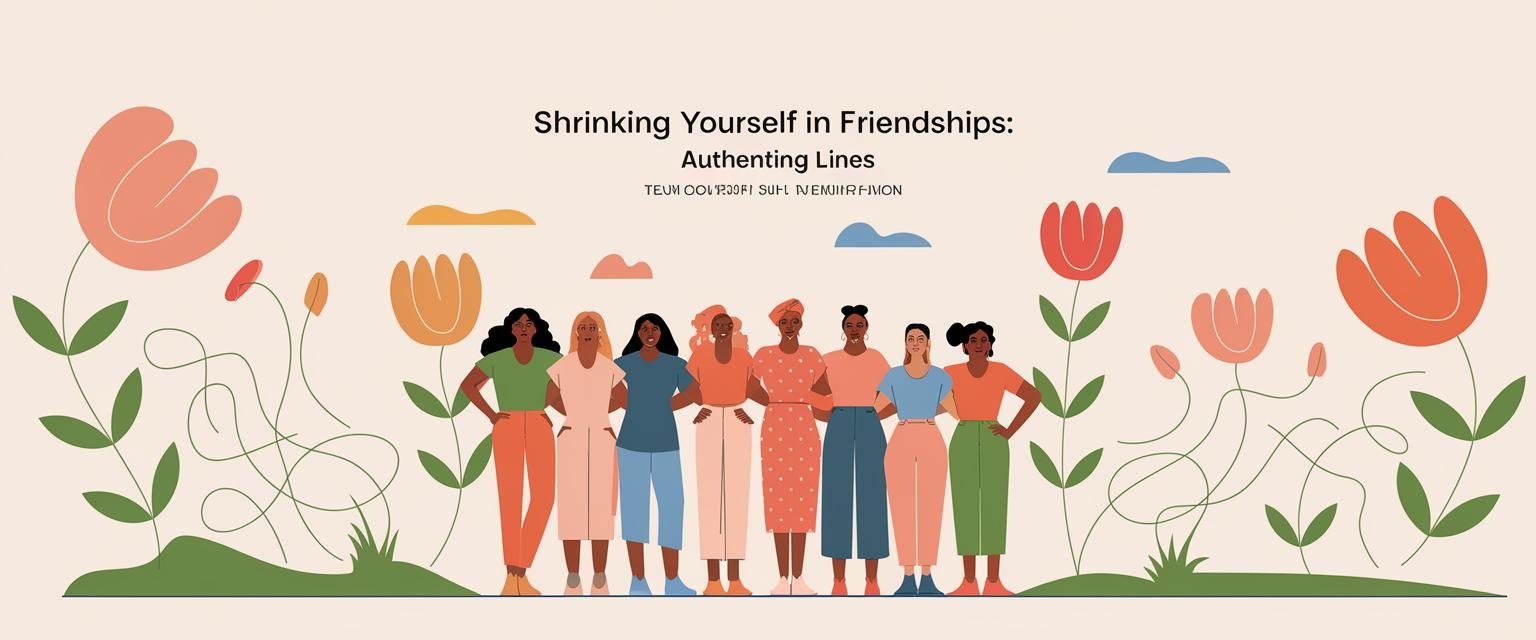
Shrinking Yourself in Friendships: Authentic Insights
Introduction
Have you ever caught yourself downplaying an achievement when talking to a friend? Or perhaps you’ve held back sharing exciting news because you worried it might make someone else feel bad? That hesitation—that quiet inner voice urging you to make yourself smaller—is what we call “shrinking.” It happens in many friendships, especially among women, and it’s time we talked about it.
This tendency to minimize our successes, dim our light, or soften our opinions to keep peace in friendships isn’t just common—it’s a pattern that affects our wellbeing and the authenticity of our connections. Today, we’re exploring why we shrink ourselves in friendships, what it costs us, and how we can build relationships where everyone has permission to shine.
Table of Contents
- Understanding Shrinking Behaviors
- The Hidden Costs of Shrinking
- Building Authentic Friendships
- Practical Steps for Growing into Your Full Self
- Quick Wellness Questions
- Finding Your Path Forward
Understanding Shrinking Behaviors
Shrinking in friendships often happens so subtly we might not even notice we’re doing it. It’s the art of making ourselves smaller—emotionally, verbally, or through our actions—to maintain harmony or avoid potential conflict in our relationships.
Signs You Might Be Shrinking Yourself
- Downplaying your achievements when sharing with certain friends
- Hesitating to share good news because you worry about making others feel inadequate
- Changing your opinions to align with those of your friends
- Apologizing for your successes or qualifying them with “I was just lucky”
- Staying quiet about your interests or passions that differ from your friend group
- Feeling exhausted after spending time with certain friends because you weren’t being yourself
These behaviors often stem from deep-seated needs and learned patterns. Many women, particularly those raised in South Asian cultures, are socialized from childhood to prioritize group harmony, avoid appearing boastful, and put others’ comfort before their own needs.
Why We Shrink: The Root Causes
Understanding why we engage in these behaviors is the first step toward change. Here are some common reasons women find themselves shrinking in friendships:
Fear of Rejection
At our core, humans fear exclusion. When we shine too brightly, stand out too much, or appear different, we might trigger an ancient worry that we’ll be pushed out of the group. This fear can be especially strong for women whose social connections form vital support networks.
Cultural Conditioning
Many cultures, especially South Asian ones, emphasize modesty and humility as virtues. Girls are often taught that drawing attention to their achievements is impolite or inappropriate. This conditioning doesn’t vanish when we grow up—it becomes an automatic response.
Comparison Culture
In today’s hyperconnected world, comparison is constant. We may shrink to protect friends from feeling “less than” in a culture that’s always ranking and measuring. Or we may shrink to protect ourselves from others’ envy or resentment.
Past Friendship Wounds
Perhaps you’ve experienced the pain of a friend pulling away after your success or witnessed relationships change when life circumstances became uneven. These experiences teach us to hide our light to protect our connections.
The Hidden Costs of Shrinking
While shrinking might seem like a small price to pay for harmony, the long-term effects can be profound for both our inner wellbeing and the quality of our connections.
Personal Impacts
Identity Erosion
When we consistently hide parts of ourselves, we can lose touch with who we truly are. Over time, we might forget our own preferences, passions, and perspectives as we become chameleons adapting to others’ expectations.
Emotional Exhaustion
Constantly monitoring and filtering yourself is draining. Many women report feeling depleted after social interactions where they couldn’t be authentic, creating a form of social burnout that can lead to withdrawal.
Diminished Self-Worth
Each time we shrink, we send ourselves a subtle message that we’re “too much” as we are. This reinforces beliefs that our natural self is somehow problematic or unacceptable.
Relationship Impacts
Shallow Connections
True intimacy requires authenticity. When we hide significant parts of ourselves, we create relationships based on incomplete versions of who we are. These connections might feel safe, but they lack the depth that comes from true vulnerability.
Enabling Imbalance
Friendships where one person consistently shrinks create an unhealthy dynamic. The friend who shrinks may grow resentful, while the other friend misses opportunities for growth that come from celebrating others’ successes.
Missing Mutual Growth
When we share our genuine experiences—including our successes—we create opportunities for mutual inspiration. By shrinking, we deprive our friends of the chance to be inspired by our growth and to expand their own possibilities.
Research from the field of positive psychology shows that authentic self-expression is linked to greater life satisfaction, while consistently suppressing our true selves is associated with increased anxiety and depression. The emotional labor of constant self-monitoring creates a stress response that affects both mental and physical health.
Building Authentic Friendships
Creating space for full authenticity in friendships requires both inner work and thoughtful action. Here’s how to begin cultivating relationships where both you and your friends can show up completely.
Choosing Growth-Oriented Friendships
Not all friendships are created equal when it comes to supporting authenticity. Look for these qualities in your closest connections:
- Mutual celebration: Friends who genuinely cheer for your successes rather than competing or minimizing them
- Emotional security: People who are comfortable in their own skin and don’t need you to be smaller for them to feel adequate
- Growth mindset: Friends who view life as abundant rather than scarce, believing there’s enough success, joy, and opportunity for everyone
- Reciprocal vulnerability: Relationships where both people share their struggles, failures, and victories without judgment
While it may seem challenging to find such friendships, they often develop naturally when we begin showing up more authentically ourselves. Like attracts like, and as we practice being more genuine, we tend to draw people who value and mirror that quality.
Setting the Tone for Authenticity
Sometimes, we need to take the first step in shifting a friendship toward greater authenticity:
Model Celebration
Demonstrate what genuine celebration looks like by enthusiastically supporting your friends’ successes. This creates a culture of mutual support and shows it’s safe for everyone to shine.
Practice Vulnerable Sharing
Start small by sharing something you’d normally keep to yourself—a goal you’re excited about or a recent achievement. Notice how it feels and how your friend responds.
Address the Pattern
If shrinking has been a pattern in a valuable friendship, consider naming it directly: “I’ve noticed I tend to downplay my successes when we talk. I’m trying to be more authentic, and I value our friendship enough to share all parts of myself with you.”
Practical Steps for Growing into Your Full Self
Breaking the habit of shrinking takes conscious effort and practice. Here are tangible steps to help you show up more authentically in your friendships:
Inner Practices
Recognize Your Shrinking Moments
Awareness comes first. Start noticing when you feel the urge to make yourself smaller. What triggered it? What exactly were you about to hide or downplay? Simply observing the pattern without judgment helps loosen its grip.
Challenge Your Assumptions
When you catch yourself shrinking, question the beliefs behind it: “Am I assuming my friend can’t handle my success? Is that truly the case? What’s the evidence?” Often, our fears about others’ reactions are projections rather than reality.
Reconnect With Your Worth
Remind yourself regularly that your achievements, opinions, and authentic expression are valuable. Consider keeping a “visibility journal” where you document moments you allowed yourself to be fully seen and how it felt.
Communication Practices
The Unedited Share
Practice sharing something about yourself—an accomplishment, opinion, or experience—without qualifying statements like “It’s not a big deal” or “I was just lucky.” Notice how it feels to let your statement stand on its own.
The Enthusiastic Response
When friends share their successes, model the response you’d like to receive. Express genuine enthusiasm and ask interested questions. This creates reciprocal space for celebration.
The Authenticity Check-In
With close friends, consider regular check-ins about how authentic you both feel in the relationship. Simple questions like “Do you feel you can be completely yourself with me?” open powerful conversations.
Boundary Setting
Sometimes, despite our best efforts, certain friendships remain places where we feel pressure to shrink. In these cases, setting boundaries becomes essential:
- Limit time with friends who consistently make you feel you need to be less than you are
- Redirect conversations that veer into comparison or competition
- Be willing to let go of relationships that require your diminishment as a condition of connection
Remember that boundary setting isn’t punishment—it’s protection. You can still care for someone while recognizing that the relationship dynamic isn’t supporting your growth.
A Note on Cultural Contexts
For women navigating multiple cultural contexts, authenticity can be especially complex. You might be balancing traditional values of modesty and collectivism with more individualistic expressions of self. There’s no single right way to handle this tension, but awareness helps:
- Recognize which aspects of “shrinking” are cultural adaptations versus personal discomfort
- Consider which cultural values truly align with your personal values
- Find culturally congruent ways to honor your achievements and express your authentic self
Being authentic doesn’t mean rejecting cultural values—it means finding the expression that honors both your cultural context and your individual truth.
Quick Wellness Questions
Q: Why do some women feel the need to “shrink” or downplay themselves in friendships?
A: This tendency often stems from early socialization where girls are taught to prioritize harmony and others’ comfort over self-expression. Cultural conditioning, fear of rejection, and previous experiences of friends reacting negatively to success can all reinforce this pattern. Many women learn that being “too much”—too successful, too confident, too outspoken—can threaten social bonds, leading to automatic self-dimming behaviors.
Q: What are the long-term effects of not being your authentic self with friends?
A: Consistently hiding your true self can lead to identity confusion, emotional exhaustion, and diminished self-worth. Relationships built on partial authenticity remain superficial, preventing the deep connection that comes from being fully known and accepted. Over time, this pattern can contribute to anxiety, depression, and a sense of isolation, even when surrounded by friends.
Q: How can I tell if I’m in a friendship where it’s safe to be my full self?
A: Look for evidence that your friend celebrates your successes without making them about themselves. Notice how you feel after spending time together—energized or depleted? Pay attention to whether you can express differing opinions without tension. Safe friendships feature mutual vulnerability, where both people share their struggles and victories, and neither person consistently takes center stage.
Q: How can I stop shrinking myself without seeming arrogant or self-centered?
A: There’s a vast middle ground between shrinking and arrogance. Authentic sharing means stating your truth simply, without either downplaying or exaggerating. Practice expressing enthusiasm about your achievements while also showing interest in others. Remember that genuine relationships involve a natural rhythm of giving and receiving attention—you don’t need to diminish your light for others to shine too.
Finding Your Path Forward
The journey toward showing up fully in our friendships isn’t always straightforward. There will be moments of discomfort as you expand into your authentic expression, and not every relationship will grow with you. That’s not just okay—it’s part of the process.
Remember that authenticity is a practice, not a destination. Each time you choose to share your true self rather than shrinking, you strengthen both your sense of self-worth and your capacity for genuine connection. You also create space for others to do the same.
Perhaps most importantly, when we stop shrinking in our friendships, we help break a cycle that has limited women for generations. Your willingness to be fully seen and celebrated creates ripples that extend far beyond your immediate circle.
As you move forward, consider starting with one small step: the next time you achieve something you’re proud of, share it with a friend without downplaying it. Notice how it feels, and notice their response. This simple act of showing up authentically might feel uncomfortable at first, but it’s the beginning of building friendships where everyone has room to grow.
Subscribe to our newsletter for weekly wellness tips and mindful practices from Hey Mandala.